Afro-house Therapy
A Deep Dive into Why 3-Step Hits Different


Our afro-house scene, despite its obnoxious cliques, shifting goalposts and oontz boogeymen, shares the unifying virtue of engaging in deeply spiritual practice. The feeling brought by 3-step, the build up, beatdrop and even producer tag is undeniable. Afro-house heals because of how it sounds, where it came from and who it is heard with.
The Long Way Here
Long before modern medicine studied it as a tool for healing, music therapy was used by African communities in preparation to deal with physical, emotional and spiritual illness. Traditional methods relied on combining rhythmic patterns with instruments to induce alternative states of consciousness and facilitate healing. Whereas most of this knowledge has been lost to the great evil of colonialism, evidence remains across communities in Morocco and Zimbabwe.
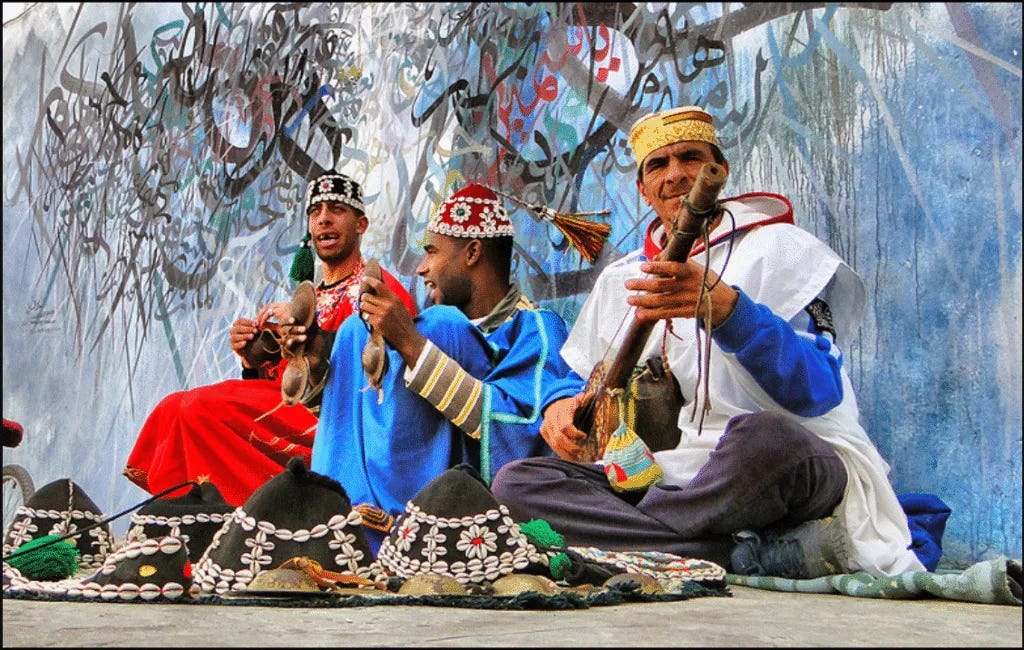
The common characteristic of African and Africa-adjacent communities is cultural complexity. In understanding the healing nature of modern day afro-house, one must listen to it with the lens of inter-relatedness. In this case, afro-house inherits both rhythm and function from its parent genres.
In This House There Is So Much Love
House music is a genre of electronic dance that is characterized by a steady four-on-the-floor beat, featuring kick drums and deep basslines. Its background deserves an article of its own, what is of essence here is that much like most soulful inventions, house music originated from predominantly black and Latino queer patrons. Factually, the name came from the experimentation of disco and soul with electronic beats in The Warehouse, an abandoned factory at 206 Jefferson Street, where in the face of segregation, queer people of colour came together to dance.
From its roots in Chicago in the early 1980s, house music birthed several subgenres. Our focus is on deep house, which features slower beats per minute, with lush atmospheric sounds and soulful vocals. A prime example is Larry Heard’s “Can You Feel It” which is cited as one of the earliest deep house tracks
It is from this subgenre, that afro-house borrows its architecture. The earliest recorded emergence of Afro-house was in the late 1980s with presence of kwaito, mbaqanga and house in South Africa. Information in this time period was unfortunately difficult to record and share, due to the apartheid regime.
I was working in townships before [Apartheid ended], and I’d get a lot of sh*t if I was caught. I mean, even name-wise I was never Christos. I changed my name like five times to avoid the cops.
— DJ Christos, DJ Mag
Afro-house fuses elements of traditional deep house music, its BPMs and timings, with South African rhythms and sounds. Instruments such as synthesizers, saxophone, trumpet and piano are incorporated. Through this fusion, the blend of black collective struggle is experienced in its own frequency. This resonance is deepened by the use of ancestral language.
In the Mother Tongue
Singing has always been a form of veneration. This is partly because of the value that frequencies and repetition hold in spiritual practice. Across cultures, hums and chants acted as gateways for believers to communicate with their spirits.
In the maintenance of this connection, lyrics have taken root in areas of devotion. Lyrics are shaped by language, which is in turn known to shape and be shaped by how we live. Our involvement of African native tongue in art, therefore, provides yet another shared floor where communion is platformed. One cannot perform in one’s mother tongue. When speaking and hearing the language of one’s ancestors you are freed from the shackles of pretense. In hearing someone express themselves in their native tongue authenticity is felt, even if it is not fully understood.
In these spaces, language as a cultural tool calibrates the nervous system into something raw and unpretentious.
A Matter of Timing
In understanding the science of soothing rhythms one must closely listen for how they organize time to draw us in, keep us still or compel us to dance.
Stupacher, Hove, and Vuust revealed in a 2023 study1 that the experience of groove depends heavily on a balance between predictability and surprise. Modern day afro-house sits squarely in the middle of these two variables. Most of the music components remain predictable while some parts engage in expressive timing deviations through subtle shifts in key or beats, contributing to the surprise element.
Take an example of Dlala Thukzin’s “Awuzwe” which features consistent jumps throughout the length of the song yet maintains the general beat. This, added to the shifting chord progressions which are central to the song, creates an environment where the mind can participate in rhythm prediction. Predictions in this case are aided by an individual’s cultural and personal experience with music and dance. This could be an explanation as to why despite hearing an afro-beats song for the first time, you could probably anticipate and accurately predict the timing of the beat drop.
We’re All in This Together
A key ingredient in the healing nature of music is shared experience. In traditional communal practice, such as religious gatherings and concerts, pleasure and the drive to move are amplified when experiencing groove with others.

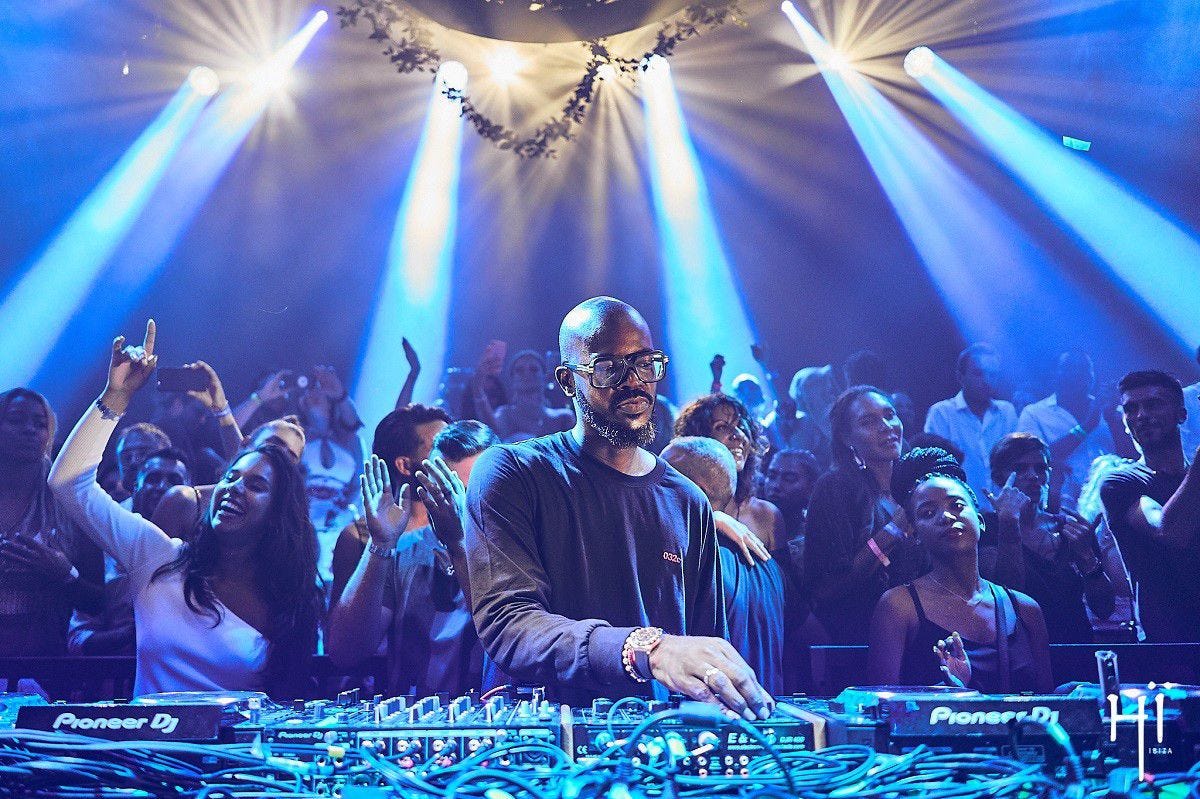
When experiencing music in a social environment, another person’s groove predictability amplifies feelings of affiliation. In house music concerts this effect of movement synchrony maintains its charge. A familiar sight at afro-house concerts is the mass sway from left to right, experienced as both a testament and a factor in feeling the music.
Whether it is background, science or soul, the pleasure is undeniable. Afro-house music moves where it is needed. It captivates, weaving its way into invisible tensions and setting them free. This genre, with all its contradictions and layers, maintains its sweet spot between carefree enjoyment and deep interconnected healing.
So when the music orients itself to the foreground of your mind, when you start to feel the rhythm in detail and the floor becomes your sanctuary, it is not imagined. This music has come a long way to prove to you that you are alive.
Stupacher, Jan, Michael J. Hove, and Peter Vuust, ‘The Experience of Musical Groove: Body Movement, Pleasure, and Social Bonding,’ in Performing Time: Synchrony and Temporal Flow in Music and Dance, eds. Clemens Wöllner and Justin London (Oxford University Press, 2023). https://doi.org/10.1093/oso/9780192896254.003.0033
Even as a producer I love making house. The 4-4 kickdrum acts like a canvas over which I have total freedom to etch whatever story I want.
This is a really well written piece. What a researcher
This made me appreciate afro house more honestly. I've always felt like the genre carries something emotional and spiritual that's hard to explain and you articulated it very well .esp the healing and cultural aspect behind the music